
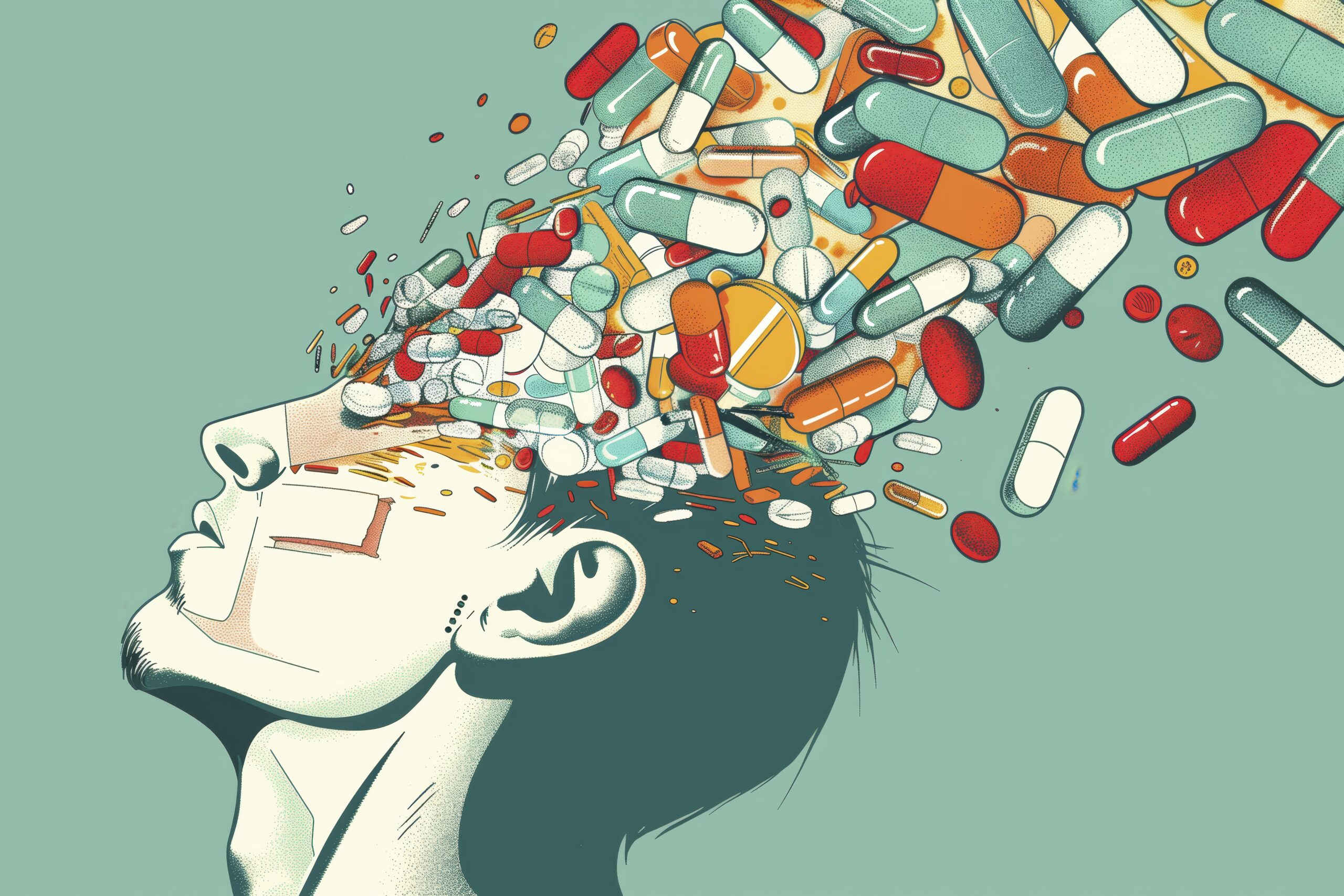
Drug addiction is an inescapable issue affecting millions globally. Despite its prevalence, numerous myths and misconceptions taint the public understanding, hindering effective prevention and treatment. In this post, we aim to debunk common myths and present the facts to promote a more informed perspective on drug addiction.
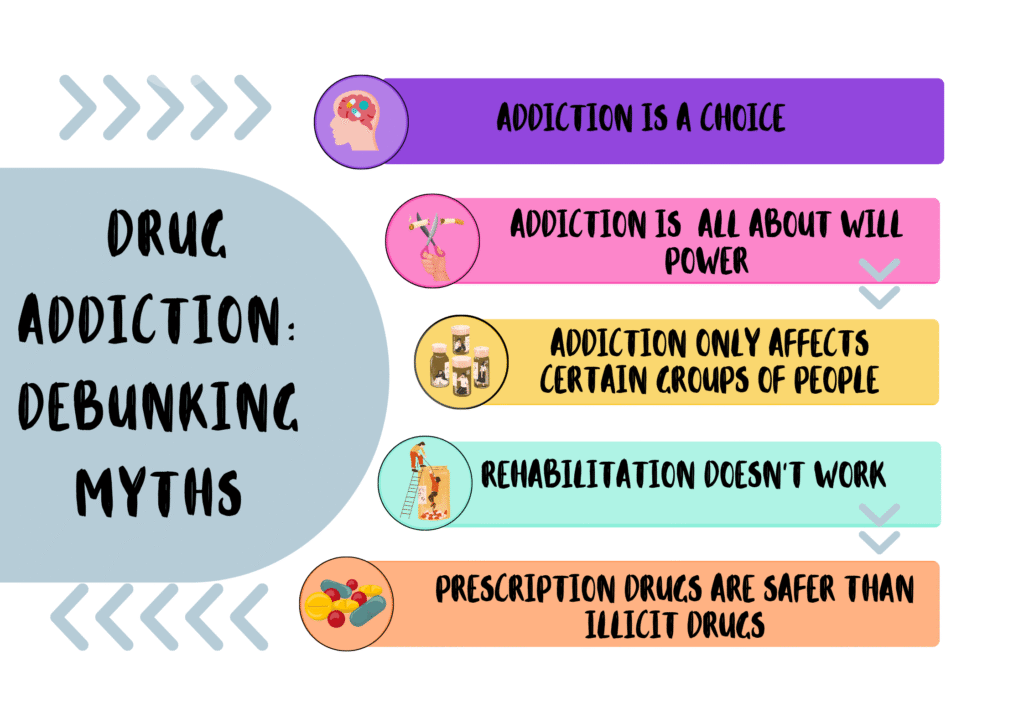
Myth 1: Addiction Is a Choice
Fact:
Addiction is a chronic illness that alters the normal brain functioning. Hence, making it difficult for individuals to control their substance use. While initial use by a person may be voluntary, habitual usage changes the brain’s structure and function, leading to compulsive behavior.
Myth 2: People with Addiction Could Stop if They Wanted To-It’s All about Will Power
Fact:
The uncontrollable and compulsive use of drugs is central to addiction. Brain changes can remain long after the person stops using substances, affecting behaviour and judgment, making it extremely difficult to quit without proper treatment and support. Hence, in short, it’s not all about willpower but also needs constant support from society.
Myth 3: Addiction Only Affects Certain Groups of People And They Are Bad or Morally Flawed
Fact:
Addiction does not discriminate. It can affect anyone, regardless of age, gender, socioeconomic status, or background. No racial or ethnic group is immune to addiction; it exists among White, Asian, Hispanic, Black, Native American/Alaska Native, and Native Hawaiian/Pacific Islander populations. Moreover, it also has a biological basis; the Illicit drugs induce changes to the brain that take significant work and treatment to overcome. In addition, genetic predispositions are also significant causative elements for developing addiction.
Myth 4: Rehabilitation Doesn’t Work
Fact:
Rehabilitation can be highly effective. While many individuals may relapse after receiving treatment, substance use disorder (SUD) is a powerful ailment, and it often takes more than one tries or approach to fight an addiction. But this doesn’t mean that rehab isn’t effective.
Myth 5: Prescription Drugs Are Safer Than Illicit Drugs
Fact:
Prescription drugs can be addictive when taken without accountability and need. Misuse of prescription medication involves taking the medication in a way other than it was initially prescribed, taking someone else’s prescription medication, or taking the medication to become intoxicated. The three types of prescription medications that are often misused are: opioids prescribed for pain, depressants used to treat anxiety, and stimulants used to treat attention deficit hyperactivity disorder (ADHD).
CONCLUSION:
Understanding the realities of drug addiction is crucial for effective prevention and treatment. By dispelling these myths and embracing the facts, we can foster a more compassionate and informed approach to those affected by addiction. If you or someone you know is struggling with substance use, seek professional help to embark on the path to recovery.